Video · Victor Marx, Mission 151
Colorado taxpayer transparency on Mission 151
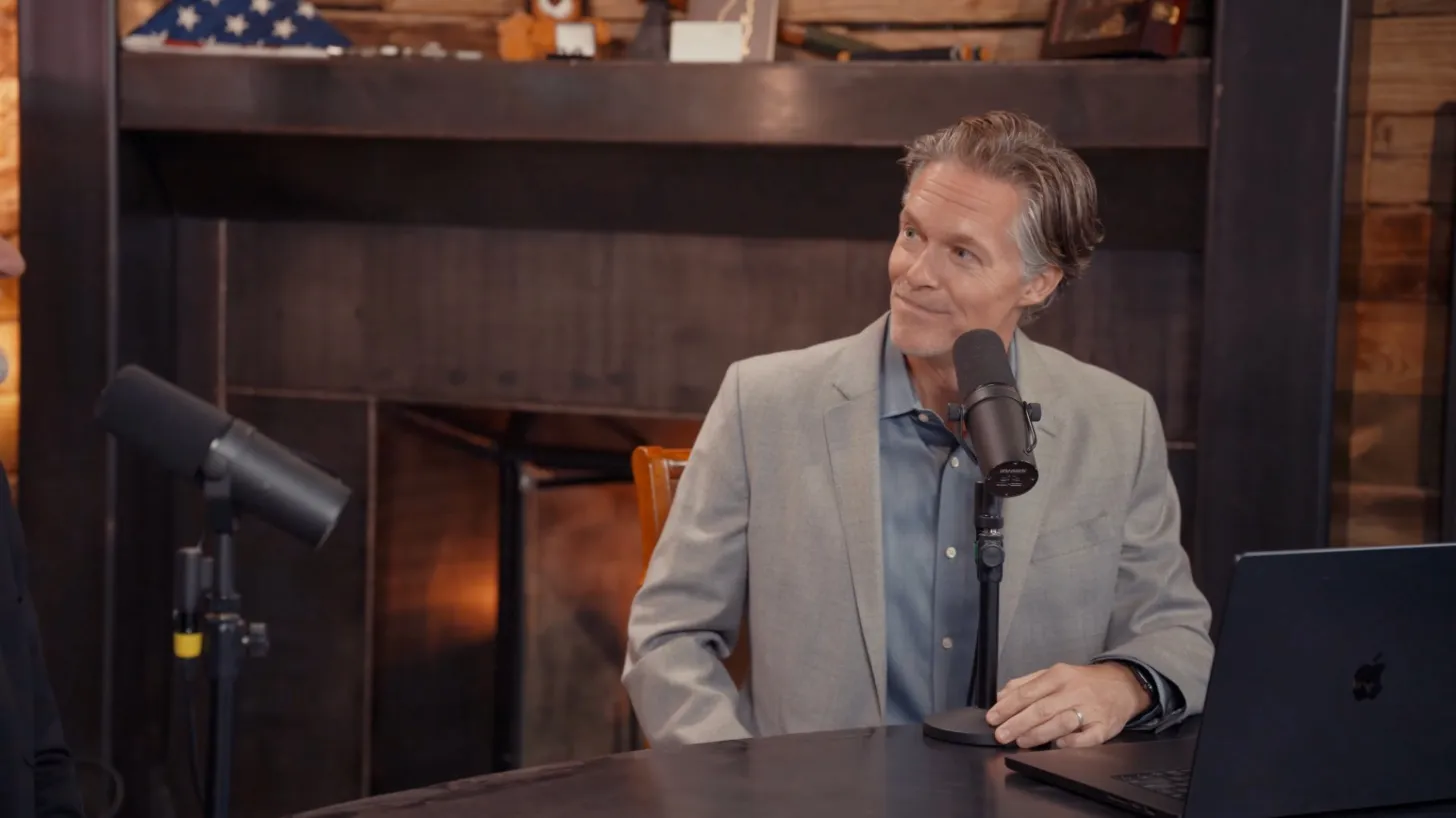
Watch onYouTube
Matt joins Victor Marx to walk through the WorksBetter™ dashboard, which shows Colorado taxpayers where their tax dollars go and what they are spent on.
Highlights
When you own shares of a company, you receive annual reports, you receive proxy statements, you might even get a dividend.
We let the numbers speak for themselves. We show our math.
In this episode
- 0:00Introduction
- 2:46Follow Your Dollar: a household's estimated state taxes, calculated in the browser
- 6:59What the money buys: health care and education take about 70 cents of every dollar
- 9:03Privacy: no accounts, no Google Analytics, no tracking pixels
- 15:32Projects requested and funded, county by county
- 17:21The $100 receipt
- 20:23The transparency portal (TOPS) and the project ledger
- 24:43Rating projects from essential to wasteful
- 28:06Questions and answers, with every source shown
- 30:07Weekly updates for a county or project
- 31:17What's next: the largest cities, other states and bill tracking
Transcript
Aired Sept. 10, 2026, on Victor Marx's Mission 151. WorksBetter™ is a legally separate public benefit corporation. It is not owned, funded, directed or controlled by Victor Marx or his campaign. The transcript is from YouTube's automatic captions, with misheard words corrected and filler words and repeats removed.
Victor Marx: 0:00 Hey folks, if you’ve ever wondered where your money’s going in the state of Colorado through taxes and fees, you’re not going to want to miss this episode of Mission 151. My guest is Matt Brady. He is the guru behind this technology. So stay tuned. This state was forged by resilient hands. Men and women who stood their ground and fought to protect the next generation. I’ve spent my life on the front lines of adversity, defending, protecting, and rebuilding where others wouldn’t dare to go. Now, my mission is here to restore strength, renew hope, and protect the Colorado we love. Well, and our whole team made that commitment. Day one, it was we’re going to treat this campaign like a deployment. Our first 100 days in office with my Colorado Works Better plan is about cutting the bureaucracy that stands between your tax dollars and real results.
Victor Marx: 1:05 Hey everybody, Victor Marx here with another edition of Mission 151. Every one of those shows are outstanding, but tonight is something we’ve never done and something that we’ve been telling people on the campaign trail and it is what will make the difference in the election and bringing people a level of education, understanding, access, and power. There’s an absolute indescribable way, but I hope we get to it tonight of what people will be able to benefit from having insight into what our dollars in the state of Colorado are doing. There’s never been anything made like this. And I’m talking about the proprietary software that I’ve been talking about, but tonight is the night we reveal it. And my guest, hi-tech redneck. No, cuz you’re not from the south. I can’t really call you that. I can call you a genius, an AI, high-tech blessed businessman, Matt Brady. Thank you for being here.
Matt Brady: 2:12 Thanks for having me, Victor. And thanks for all that you’ve done. This is exciting. Thank you for your leadership.
Victor Marx: 2:20 Well, it teamwork is dreamwork, right? And of course, I’m always a little bit more jovial, I think, because of the reality and the intensity of what we deal with daily. And this will change Colorado for sure. So, let’s just jump right into it. What do we have? What are we telling people tonight?
Matt Brady: 2:46 We’re looking at the WorksBetter™ platform. Again, thank you for your leadership. This summer I founded the company WorksBetter™ and we get to unveil it tonight here in Colorado.
Victor Marx: 2:55 Let’s dive in. Let’s go.
Matt Brady: 2:57 Let’s begin with something that every person cares about and that’s where their own money goes. So you can see on Follow Your Dollar which we have a QR code you’re welcome to scan. It allows you to enter your own information. Now I’ll say right off the bat this information stays only in your browser. There’s nothing about what you enter here that comes back to us. And I’ll say start with something like 80202 or in this case we’re in Colorado Springs 80908 El Paso County. Let’s put a nice even household income in. And what I’ll tell you is as you’re entering all of this data, everything is calculating on the fly. So let’s say that we’re married three vehicles. 750 is about the average household worth and say $25,000 of taxable spending per year. This is a very common scenario.
Victor Marx: 3:55 Hold right there. I want people to understand we’re looking at this as though if you spend $100 at the store and you get an itemized receipt showing exactly where your money went. That’s basically what we’re doing. The government takes thousands of our dollars, your dollars from your family every year. And most taxpayers, we’re never given a clear account of how that money is spent. And I think this is important because we have to produce beneficial results for us to understand. Last night I’m in Bent County and I just simply said to the audience, it was representation of six counties. Great group, man. Love my rural friends. And I just said, “How many of you have ever downloaded the budget or the long bill?” Not one person raised their hand. Except a senator in the back. He’s supposed to. And I said, “How many are business people?” Number of hands. And I said this, “If you ran your business like our state runs theirs, how long would you be in business?” They started laughing. They’re like, “Oh my gosh, a month, three months.” So, what we’re doing, we believe taxpayers should be treated as shareholders. We’ve discussed this. It’s a $49.6 billion organization, the state. So, you should be able to see where your tax dollars go, what the government is funding in your communities, and whether the projects you’re paying for actually delivering what’s promised. So, I just wanted to say that, you know, and I’ll say this before we go any further, Matt, let me start with a question. I believe most taxpayers have, and it’s what we’ve been hearing from thousands of people that ask and talk to us on the campaign trail, where is my money actually going? And first, that’s why we’re getting into the dashboard and giving everybody access to it. So I wanted to say that before we went any further.
Matt Brady: 5:59 It’s critical. This is not just a long bill or policy. This is someone’s lived experience. So by entering something like Colorado Springs, El Paso County, household income, home worth, and annual spending. And you can easily adjust these to be whatever might be accurate. Everything is calculated in real time. So, first your household’s estimated payment where your money goes to fund the government. Where does that go? Well, most of it is through state income tax. Of course, some of it, as the receipt that you alluded to, Victor, is in sales tax, which is flat for everyone, and then gasoline, which is based on consumption, and then vehicle taxes. So you can see that for the scenario that we provided, $3,600 a year, some $300 a month is taken from taxpayers to fund our government. From there, the question becomes, well, how does that get to the 49.6 billion that you mentioned? And then where does it go from there? And this tool seeks to give all of that information to every shareholder in the state of Colorado. Of course, then the question is, well, I know where my money went, but what did it buy? And you can see that here as well. So, just like we looked at the outflow of money, what are the uses of that cash? Primarily, it’s health care. Some 41% of your tax dollars across the state go to fund health care. What’s also interesting is that education, which is an investment in our future as a state, another 30% of the money goes there. So 15% to K through 12 and a 13% contribution to higher ed. So we’ve got 70% of our tax dollars spoken for through health care and education, which may or may not surprise people, but those are very significant portions of our operating budget. From there you can see there are some other line items which are visible. And of course what people want to know as much as you know how something like a tax bill per year rolls to the some 50 billion. Are they getting contributions to their own community and so the map shows projects that are being run and I can explain this in more detail but how close to home are some of these? In this case, there are a few projects and in other cases, we could look at counties where there are not projects that are currently being funded.
Victor Marx: 8:31 Well, okay, let me ask you. Are they going to be able to go just to Colorado better or do they have to put in their email and sign up?
Matt Brady: 8:39 Yeah, great question. You can go to coloradoworksbetter.com right now to see this site live. You can also go to the campaign website and the Colorado Works Better page now redirects to that site. You can also scan the QR code and follow along if you’d like to watch your dollars through this same process.
Victor Marx: 9:03 Why did the details matter? I mean, people I want to make sure that people don’t feel there’s an invasion of their own privacy.
Matt Brady: 9:11 Yeah. Well, it matters in two ways. First, we protect users data. This site is free to users to the taxpayer shareholders of Colorado. And the second thing is the details matter because it’s the only way that anyone can participate or engage in civics is to know what their role is, what their stake in this operation is. And so our desire is to allow this tool Follow Your Dollar to let them engage with the content and we could put a different zip code in and see say in Denver county with let’s say a much higher income and home worth that as we know is not uncommon and maybe the spending is commensurate.
Victor Marx: 9:50 Well, let’s make sure for some of our constitutional libertarian privacy folks. I is them logging onto this spying? Are we using Google Analytics? Are there tracking pixels, cookies? Is any of that people have to be concerned with?
Matt Brady: 10:17 Great question. We actually took great pains to build tooling outside of Google Analytics. We have no account for users. The only time that you would ever enter anything is on Follow Your Dollar. And again, simulate play around, try some different zip codes and some different incomes and look around the state and get to know how folks in other counties have a lived experience of their own. If at any point you would like to have information about your county sent to you weekly, we’re happy to offer that service. You enter your county I’ll go with mine. Your email address. It’s the only time we ask for any information from the user is when they provide feedback to us or when they ask for a weekly report.
Victor Marx: 11:03 That’s fantastic. So folks, again, this has never been done before and we’re excited to be able to share this with you tonight. So yeah, let’s go to in Denver.
Matt Brady: 11:14 Great. Let’s do it. So Denver 80202 is a sample zip code. We can increase the income. We can increase the home worth. In fact, it’s not common not uncommon for home values to be even higher and then spending would be commensurate. And what you can see is a $5,000 tax bill for a couple filing joint. Now, interestingly, filing single is actually more of a tax bill. And so, you can see that’s $530 a month for someone living in 80202. You can see their receipt where the money goes, the sources of the tax as well as the uses here. Round-tripping through that $50 billion annual budget. Back to the receipt. 40% or more goes to health care, 15 to K-12, another 13 to higher ed. 70% of the taxes collected for the typical citizen of Colorado go towards funding health care and education.
Victor Marx: 12:20 This is what’s concerning is we all want to pay our fair share to live in one of the most beautiful states in our nation and have our you know core services taken care of. But what people feel our lived experience is where is the money going? What are we getting for this? And we know that inside of certain agencies the money is not being efficiently used and certainly people are not being represented around the state. That’s what probably breaks my heart more than anything is, you know, the heat map that shows where counties have requested funding from the state and how many never got it. Again, I’ve traveled rural Colorado and you know, I live on the front range, but I’ve traveled I met with people you know, I’ve been to counties where the median income was 33,000, 40, 50. It is compared to a statistic that just came out that said for an average family of four, you need to make over $220,000 a year to live comfortably. So man, we need strong economic resurgence, businesses, opportunities in our state for better jobs and better ways for the state to bring in income instead of levying taxes and fees, bypassing TABOR. And that’s the problem with this. You read that about Denver. I think, man, a single person who’s paying rent, which would used to be a mortgage size, they just can’t afford it. Including firemen, police officers, first responders. It doesn’t matter. The tax burden is extreme. And I say this all the time, Matt. Colorado doesn’t have a money problem. Obviously 49 almost $50 billion dollars. We have a spending problem and this is what we’re showing people and we want you all to go in figure out how it’s affecting you personally. But let’s continue.
Matt Brady: 14:54 It’s absolutely critical and I’ll add teachers to that list of first responders and those who are not only investing in our future as a state but training up our future leaders which I personally hold in great value and honor. Whether it’s Denver County or Mesa County, this map shows based on zip code the projects that are being funded. You mentioned the front range. There are numerous projects being funded on the front range. Other far fewer projects being funded in the eastern plains in the western slopes in the south of the state. The other notable thing here let’s take Mesa County for example county seat is Grand Junction $100 million was requested.
Victor Marx: 15:40 Unbelievable and yet the state will put mandates non-funded mandates on counties and now they have to raise those taxes. It’s I’ve met with county commissioners, boards, they feel the pain of it and they believe that Denver explicitly those under the golden dome have forgotten about them. But you can see this is it’s a very sad reality for most people outside of the you know front range.
Matt Brady: 16:08 You mentioned cost of living and affordability, specifically fees. A component of the WorksBetter™ platform that is in the design, build, test, deploy cycle, and we’ll only launch it when it’s ready, when it’s done right, is a view on the cost of living and vehicle registration, two very key contributors to both families and small business owners, of which I’m thankful to be both. And to that end, the fees are really what has increased. And our goal with WorksBetter™ is to show this to people to allow them to have access to engage with the information to make it their own. You mentioned this concept of shareholders. When you own shares of a company, you receive annual reports, you receive proxy statements, you might even get a dividend. TABOR sounds pretty similar, but that’s the only similarity. And if and when TABOR is no longer funded and we again are prepared to show that information for the users on WorksBetter™, we lack all three of those components and I think all three are possible. So that’s our intent to deliver on each of those.
Victor Marx: 17:21 Love this. Now let’s make it even simpler. Show us a $100 receipt. I mean, if every $100 paid to the government were printed like a receipt, what would taxpayers see? And Matt, it shows a map how someone can see what is funded and what is not funded and what happens in communities across Colorado.
Matt Brady: 17:46 Great. It’s the perfect segue. The landing page for Colorado Works Better leads with the headline, the $49.6 billion. But it’s difficult for us to wrap our minds around what that number really is. It’s so large, so abstract that it really helps to look at a $100 receipt. So $41.45 of every $100 spent by the state of Colorado goes towards health care. Now, of course, that includes all the dimensions of public health. And then we have K through 12 education is $15.87. Higher education $13.23. Looking at those three together, that $70 of every 100 tax dollars spent goes towards health care and education. Two very important services that may have significant opportunities for improvement through the use of technology, better process, more equipping, and a variety of other incentive based outcomes, including better leadership.
Victor Marx: 18:50 That’s my perspective saying this because when you talk about health care and education, we know right now that our children are not benefiting from the amount of money flowing into the bureaucracy of education. Teachers are still underpaid, overworked. In some places, they can’t even get appropriate teachers. Which is sad. But I think about educators that I’ve talked to all over the state and they just say, special needs classes, we can’t get positions filled. It’s unaffordable for housing. They can’t get the housing needed to live in the area. So, they have to drive a great distance, especially up here on the front range. One aspect of health care in the Medicaid system is has been cut. Funding has been cut for home health care for home caregivers. Parents, I remember this one lady and it’s been repeated countless times. They’re weeping saying, “I’ve been the primary caregiver of my daughter with cerebral palsy or whatever it is.” And they just had funds cut by near 50% to hours. That’s was decisions made by politicians and again good Coloradans don’t mind paying taxes or appropriate fees if we can see the outcomes and the outcomes are not good.
Matt Brady: 20:23 Coming back to the question Victor that you raised about where the money goes. Not only is it good to see a receipt of the expenses which we’ve talked through and I think there’s great clarity through the work that we’ve done and thanks to the folks who make this data available in the public in the first place. One specific capability is called TOPS. It’s the transparency online portal and that is a great initiative. It only reports one of the 23 departments and groups within the state of Colorado. So, the Department of Transportation, we have the ability to see spending where the money actually goes. The others we don’t. And there’s been some good reporting from KUNC and other journalists who have requested that information so that the taxpayers of Colorado have access to a TOPS system that actually provides transparency across all 23 departments.
Victor Marx: 21:19 So this is something that the state came up with to in essence self-audit or provide information to taxpayers through a system they call TOPS. The problem is I think they had a great launch, promised people a lot, but out of all the agencies that are supposed to report everything, there’s only been one, and that’s the Department of Transportation. Folks, that is more than concerning. That is the lack of leadership in our current government where they produce this great way to hold themselves accountable by transparency to Coloradans, but then they don’t and nobody follows up on it. That’s why this is needed, the Works Better plan.
Matt Brady: 22:12 Our effort is to build on prior administration’s work with dashboards but to bring the information that the shareholders of Colorado actually need more than employee satisfaction scores for the state employees but to actually see the effectiveness of the investments that are being made and the decisions that are taken along those lines as to where the money is being spent not by a $100 receipt but on a map as is displayed here. You can see that the map of Colorado shows a variety of projects and some of these are quite significant. So, let’s take for example the I-70 Floyd Hill improvement project. Its current estimate is $905 million. It’s underway. This is reported by CDOT. And you can see in the legend that there are blue transportation projects and gold building and facilities projects. About 50 projects exceed the $10 million threshold. Of those, only about 10 are current or active presently. And you can see that they run along the front range primarily in the northern and central parts of the state. And then the outlined that the dotted line circles show projects that were requested but not funded. And notably, there are 28 of those projects. I mentioned Mesa County requested $100 million. There are counties throughout the state who have requested money who have not had those requests approved. You can click into any one of these projects. Again taking I-70 Floyd Hill, a remarkable undertaking going through the mountains of Colorado about 8 miles going east and west. And the portal shows all of the information. It shows the project when it was funded started at $700 million. The current estimate is $905 million. And it is public record as to the vendors and to the ultimate status of this project. We’re working through a variety of sources to get the information that is not yet available in TOPS. We hope that it’s made available through TOPS the transparency online portal. But we’ll get that data even if it’s ultimately not made available through TOPS. One other key thing Victor that I am really proud of and that is that taking feedback from users. So this is a classic five-point Likert scale or said differently. It’s a essential worthwhile neutral questionable or wasteful rating that we can quickly take in quantify do some analytics on and present to you. What’s also important is that we allow for comments to be shared and we have an algorithm to redact anything that would be sensitive or personal. We roll that information up and so the quantitative and the qualitative elements of how people are engaging with this content. Not that this is a scientific poll or a vote, but that it’s a real-time pulse check on how people are feeling about where their money is going and the effectiveness of these investments.
Victor Marx: 25:28 Folks, what Matt is saying is this is what Coloradans want. They want to be heard. They want to be listened to. There’s such a disconnect. And if you’re watching this, you know exactly what I’m talking about. It doesn’t matter if you’re living in Boulder County, El Paso, down in Montezuma. There’s this disconnect where people don’t get heard. This is an incredible way to help inform your government, spending your money on what you like and don’t like.
Matt Brady: 26:10 I’ll reiterate our commitment to protecting the privacy and the autonomy of Coloradans. And that is to say that the only thing that’s asked for here is their rating, any feedback that they might have qualitatively.
Victor Marx: 26:24 And folks, this is I’ll just share this. This is an incredible tool that’s going to make our state more efficient, more affordable. And then it allows us to put leaders in the right positions so that we can take our state back and make it affordable. And we haven’t even talked about safety yet, but affordable so that our kids can stay home instead of leaving the state. They can get jobs. Farmers, ranchers, their family can continue generations of work. Instead of making it so unaffordable. That’s what I will do in our administration. So, we’ve covered kind of a bird’s eye view on this accountability module. There is more, but we want people to be able to go to the website and start to explore how it’s affecting you personally. You know, affordability is the key for Colorado to get better. And through this, we’re able to then have performance checks, start with a zero-based budgeting, not just a bunch of fluff, but facts, so that we can trim the budget and in some places cut the budget significantly so that the burden of taxes and fees are being taken off of Coloradans. And that’s how we start to stimulate our economy, also make it a place businesses want to come back to and thrive. This is key and I’m excited. There’s a couple of more things we’ll tease a little bit about. Would you share with folks?
Matt Brady: 28:06 Yep. We’re in development on a capability that allows the users to just sit back and let questions and answers that are common say in any topic or you know you can shuffle across a variety of topics or drill in on let’s say something like education which is I think top of mind for almost every citizen of Colorado. Again, it’s our future here. And so things like reading levels, I’ll pause here on the reading level which has measured most recently and we always cite our sources. So in this case it’s the Colorado Department of Education CMAS state summary that 44.7% of tested students meet or exceed expectations in English language arts on CMAS, the state’s own test in 2025-2026. So we let the numbers speak for themselves. We show our math. The honesty framework calls for any calculations and every source to be displayed and then of course you can click through to learn more. You can favorite this and you can forward an interesting piece of information through social media so that you can share this out and get other people to engage with these topics.
Victor Marx: 29:15 Oh my gosh, that’s fantastic. This is going to grow and put the people back in charge of the government because that is what government exists for. And you know, I would say this, the stark difference between my opponent, Phil Weiser, he believes government can solve all problems by becoming bigger. In order to get bigger, it has to charge the people more through taxes and fees. Mine is run the government efficient. Make it smaller. Let people keep more of their money. So, I’m excited for you at home to go check this out, have fun, and listen to tell them how if they want to get updates, how simple this is and what they can do.
Matt Brady: 30:07 Great. So, at the top of the page, you can click the get updates button. That will ask for the county that you’re interested in receiving information on and your email address. It’s one of the only times we ever ask for any information that we store about a user is their email so that we can send them weekly updates about their county or projects that they’re interested in following. I mentioned I-70 Floyd Hill. If you are an interested party in I-70 Floyd Hill, you are welcome to receive updates. When the public data sources that WorksBetter™ accesses have new information about that project, you will receive those updates. The other thing I’ll say when you provide feedback to us we’re taking that information anonymously all of the information is partitioned in a way that you can interact with the system privately yet engage with the content and receive those updates automatically.
Victor Marx: 31:04 This is fantastic. Now, before we close tonight on this segment, I want to ask you other things that you’re working on and where you foresee this going.
Matt Brady: 31:17 Well, again, thanks to your original leadership and we’re very happy to report that we’re working on the five largest cities in Colorado so that we can bring these jurisdictions down to the metro areas. And then of course there are many other states who have very similar needs. So we are pleased to share with you that we have numerous states that are under development and of course the federal government where this would I think add a tremendous amount of value to all of us Coloradans. So those are three areas where we foresee bringing additional value to the shareholders in our state.
Victor Marx: 31:54 Now something else I just it just came to my mind. There will be other modules tools within WorksBetter™ that include the justice piece other agencies once we are able to have full access to the information and I want people to know this is how we make our state affordable again this is how we make it safe also when it’s time for policy to be passed. I think our politicians have in my point of view and many Coloradans a very sneaky way to get things passed that they really don’t understand. We’re going to be able to provide an incredible way to track bills, things going through process, be alerted to it, and then you can weigh in or find out more about it, but weigh in on this is something you want or don’t want. Instead of just a rogue administration or legislation passing hundreds of bills every year in a 90-day period and that you can’t keep up with. This is a form of accountability that we will shine a light on and have better legislation passed or as governor vetoed.
Matt Brady: 33:26 The module that we’re building is called Before It’s Law. We have access to all of the legislation that’s on the floor and I will say it’s very effective. There are scoring mechanisms used to cost out a bill and so obviously the primary focus of WorksBetter™ for now is the financial and the quantitative. Of course the qualitative feedback I think will be just as valuable as the five-point green to red reviews and feedback that you receive. But it’s really important to note that whether it’s fiscal responsibility or a policy that’s set for our state will be able to share with the citizens of Colorado the laws that are being discussed. You can click in, read about that law, who sponsored that law, who the co-sponsors and authors of the bill might be, and then you can see who’s voting which way. And I’ll say that having looked at a wide variety of these bills, the votes aren’t always along party lines and they’re not always in one straight path forward. There’s some really interesting fluctuations. And so I think again this tool and our heart behind WorksBetter™ like all of the projects that I’ve built for the nonprofit world, for the high-tech world, for the higher ed world. They’re always around helping people and impacting people’s lives. And our hope is that by giving people access to this information, it will in fact make a difference that it will benefit the residents of Colorado and ultimately drive for better outcomes for everyone who’s here. To that end, the bills you yes can provide feedback on. We would always say speak with your representatives. You’ve elected them and they should be working on your behalf. But we look forward to making Before It’s Law or this module available to users soon.
Victor Marx: 35:18 I love it, Matt. Thank you. I want to thank your entire team. So much work has gone into this. And accountability cannot be just another campaign slogan. We’re tired of hearing that. It has to be a way of governing. And folks, I want to encourage all to visit coloradoworksbetter.com or scan the QR code, explore your tax dollar estimate, look at $100 receipt, review the projects in your community, and tell us what you think. Folks, remember, you own the state, and all we’re doing is telling you as a shareholder about the report you deserve. And I like to say this, WorksBetter™ is a legally separate public benefit corporation. It is not owned, funded, directed, or controlled by me, Victor Marx, or my campaign. The campaign played no role in developing the company or its platform. I am highlighting the platform because I believe this transparency tools that it offers can help Colorado work better and understand how government uses your money. Folks, as you watch this, I’m currently at a fundraiser. We’re on the campaign trail. So, I want you to know your questions matter. We’ll give you a week to have fun with this. And then next Thursday on Mission 151, please tune in with your questions and we’re happy to answer them. It’s going to be exciting week. God bless you and see you next time.
Show links
Bring Matt to your event
Keynotes, workshops and DECIDE BETTER® sessions for leadership teams.
Book EventMore from Matt
All media 32 min
 11 min
 11 min

